

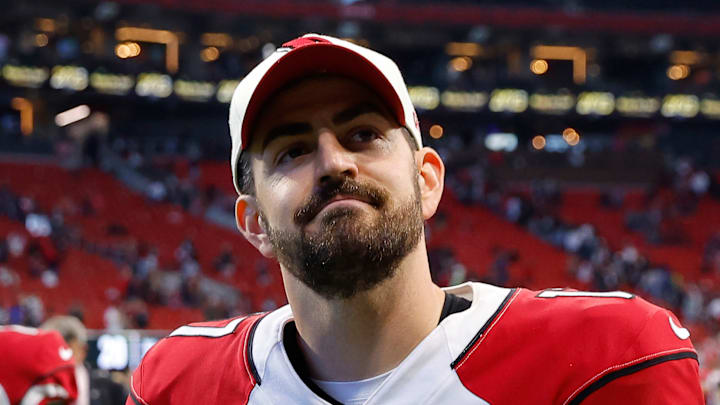
If you want to understand why the Washington Commanders named 30-year-old David Blough as their new offensive coordinator, look no further than Declan Doyle.
Doyle was hired by Chicago Bears' head coach Ben Johnson to serve as his offensive coordinator when he took over last year. He was 28 years old at the time.
Or look down to the Carolina Panthers, where head coach Dave Canales brought in Brad Idzik as his offensive coordinator in 2024, who was 32. Clearly, there has been a recent shift toward younger coordinators.
In a vacuum, the mere youth of coordinators like Doyle and Idzik doesn’t mean much. But look at the results.
Carolina’s quarterback is Bryce Young, the top pick of the 2023 draft. Chicago’s is Caleb Williams, who went No. 1 overall in 2024. Both were seen as busts in their first year.
Plenty of questions still remain about both Young and Williams, but here's one question you cannot ask anymore. Will they ever take their teams to the playoffs? That has been answered this year, as they operate in systems at least partly designed by their very young coordinators.
David Blough promotion ensures Commanders join the league-wide trend
This isn't just about Quinn losing Matt LaFleur and Mike McDaniel during his time with the Atlanta Falcons. It's not even about Washington failing to benefit from the exceptional Mike Shanahan coaching tree after his departure. Blough's promotion signals a shift to the modern era.
The league is undergoing a youth movement, and its coaches are not immune. In 2020, the average age of the 14 playoff quarterbacks was 32. That included six in their 20s, six in their 30s, and two — Tom Brady and Drew Brees — who were past 40.
This year, those numbers have plummeted. The average starting playoff quarterback age is down four years to 28. Twelve of those signal callers have not yet turned 30.
With those numbers in mind, Blough’s age doesn’t seem so outrageous. But there are other factors that make him somewhat of an outlier, and perhaps a somewhat greater risk as well.
Neither Doyle nor Idzik was a player. Though they are about the same age as Blough, both came to their jobs with far more coaching experience.
Their trajectories were remarkably similar. Both began as assistants while in college. Both immediately entered the pro ranks and served as assistant position coaches for four seasons before taking over as head position coaches. Idzik held that role for one year before being promoted to coordinator. Doyle was a position coach for two years before Johnson brought him to Chicago.
Blough played quarterback in the NFL until he was 28. He was hired as an assistant coach under Kliff Kingsbury and Tavita Pritchard in 2024. When the latter left to become Stanford’s head coach late in the season, he was elevated to quarterbacks coach.
Do the math. Blough had two months of experience as a head coach before being promoted to offensive coordinator. That, far more than his age, is the astonishing thing about this hire.
The other major difference between Blough and the other young offensive coordinators who are succeeding in the league today concerns their respective head coaches.
Johnson and Canales are offensive guys. They call the plays in Chicago and Carolina. They obviously have the dominant voice in designing the offense.
That’s not the case in Washington.
Quinn is not calling offensive plays. He is not helping design offensive game plans. Unless there is some other surprise hire on the horizon, that will fall entirely on Blough.
Is he ready? Time will tell.
Washington fans remember all too well the abundance of young coaching talent that existed under Shanahan. Those coaches went on to great success for other franchises. With the Detroit Lions reportedly in pursuit of Blough, Quinn seemed intent on not allowing another gifted young offensive mind to leave town.
 Add us as a preferred source on Google