

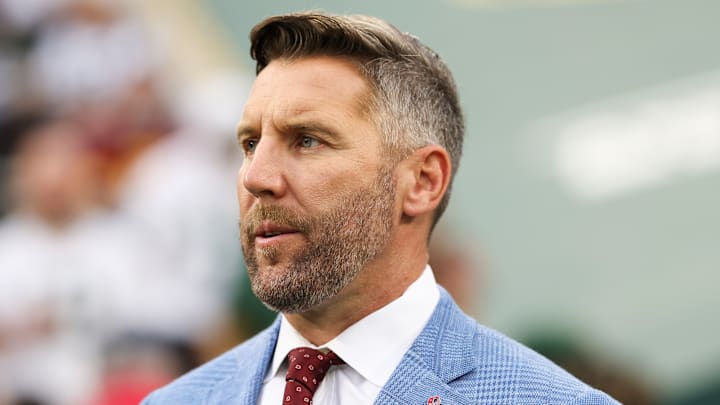
Barring any major surprises, Washington Commanders general manager Adam Peters will have six draft picks and a lot of salary cap room with which to rebuild his roster this offseason.
Even if the Commanders hold onto defensive lineman Daron Payne, they figure to have a very healthy cap situation for 2026. A new contract for left tackle Laremy Tunsil could free up even more in the short term.
This is reminiscent of the situation Peters found when he arrived two years ago. The fact that he has an aging, underperforming roster does his reputation no favors, but it shouldn’t really affect his general philosophy.
In 2024, the Commanders resisted the temptation to spend big on one or two headline-grabbing names. Peters spread his money around on young veterans who were flying a bit under the radar. It paid off in a major way, so he may adopt a similar strategy this time around.
Commanders projected to bolster running back room with Javonte Williams
Ryan Guthrie of the Pro Football and Sports Network linked the Commanders to Dallas Cowboys running back Javonte Williams in free agency. His reasoning has a certain degree of logic.
Williams is a workhorse. At 5-foot-10 and 220 pounds, he is a powerful downhill runner who established career highs in carries, yards, and yards per carry in 2025.
Austin Ekeler and Jeremy McNichols are both past 30 and are pending free agents. The former tore his Achilles tendon in Week 2. It seems unlikely that either will return.
Chris Rodriguez Jr. is also up for free agency. But he will be a restricted free agent, meaning Washington retains a fair amount of control over his ability to join another team. The Kentucky product has shown flashes of being a quality back, but entering his fourth season, he has yet to prove he can be consistently reliable.
The only sure thing in the backfield right now would seem to be Jacory Croskey-Merritt. He won over fans and coaches alike with his big-play capabilities. He certainly figures prominently in the Commanders’ plans. But if the Commanders want to platoon seventh-round pick, which would seem like a smart move given his size and relative lack of experience, adding someone like Williams makes sense.
On the flip side, there are red flags.
There is no denying how good Williams was in 2025. He finished ninth in the league in rushing with 1,201 yards. He was top 10 in rushing touchdowns and 14th among all qualified running backs in yards per carry. His 4.8 average is very impressive for a back who does a lot of his work between the tackles.
That yards per carry was higher than Croskey-Merritt’s in 2025, and those 1,201 yards are more than any Washington runner has achieved since Alfred Morris in 2013.
These were all career highs for Williams. In his previous four seasons — all spent with the Denver Broncos — he averaged just under 600 yards per year. His yards per carry came in just under 4.0. He scored 11 total touchdowns.
Was 2025 a fluke, or was it a sign of things to come?
Maybe the more germane question is this: Will a between-the-tackles runner like Williams thrive behind Washington’s offensive line? He certainly did with Dallas’ outstanding guards Tyler Smith and Tyler Booker leading the way.
This may be trickier to handicap with the new offensive coordinator, David Blough, in place. He has no track record as a designer of offenses. It is difficult to know what kind of running attack he wants to employ.
But the basic question remains. Williams is projected to command a three-year deal in the $22 million range. In the world of NFL contracts, that’s not too bad. But is it better than a much less expensive deal for Rodriguez, especially when the Commanders need to invest the lion’s share of their free agent spending in revamping the defense?
It’s just one of many questions Peters will no doubt be mulling over in the next six weeks.
 Add us as a preferred source on Google